Removalists Killarney Heights.
Named for a Middle Harbour picnic ground. Every street has an Irish placename. A Lithuanian couple lived in a cave in the adjacent bush for 28 years.
Killarney Heights is part of the Forest District cluster on Sydney's Northern Beaches, 12 kilometres north-east of the CBD, situated on a peninsula bounded by Middle Harbour to the south and west and Garigal National Park to the east. The suburb sits on a hard stony ridge above Middle Harbour and was originally part of Forestville. It began to be developed in the 1950s under the names South Forestville and Heidelberg. Substantial development by LJ Hooker began in the early 1960s in the section east of Starkey Street, ahead of the completion of the second Roseville Bridge in 1966 which gave the suburb proper road connection to the North Shore side of Middle Harbour.
Most of Killarney Heights is entirely detached - substantial family homes on large bushland blocks, with one of the highest freestanding dwelling rates on the Northern Beaches. Long-term owner-occupation means moves here tend to be full household relocations.
Killarney Heights has a population of around 4,500 and 90% of dwellings are separate houses - one of the highest proportions of freestanding homes of any suburb in its area. Killarney Heights Primary School has an extensive English-French bilingual program that has made the suburb popular with French-speaking families, and there is a Killarney Heights High School as well. The local shopping area has a bakery, cafe, fruit shop and hairdressers - modest but sufficient for a suburb that is 12 kilometres from the CBD and feels considerably further. The Roseville Bridge, originally built in 1924 as a two-lane structure and replaced with a six-lane bridge in 1966, is the main connection between Killarney Heights and the North Shore.
A Middle Harbour peninsula with limited ways in for a truck - Billy or Jet maps the approach before every Killarney Heights job, not on the morning.
Warringah Road access, Irish-named streets, and the Middle Harbour ridge terrain
Killarney Heights is accessible from the west via Warringah Road through Forestville and from the south via the Roseville Bridge and Roseville Chase Road. Warringah Road is the main arterial approach and carries the suburb's bus services to and from Chatswood and the city. The residential streets that branch off the main access roads are the Irish-named avenues - Galway, Blarney, Dublin, Donegal, Tipperary, Ballyshannon - and they vary in gradient depending on where they sit on the ridge. Billy plans the truck approach for any Killarney Heights job via Warringah Road from the Forestville direction, which is the practical truck route.
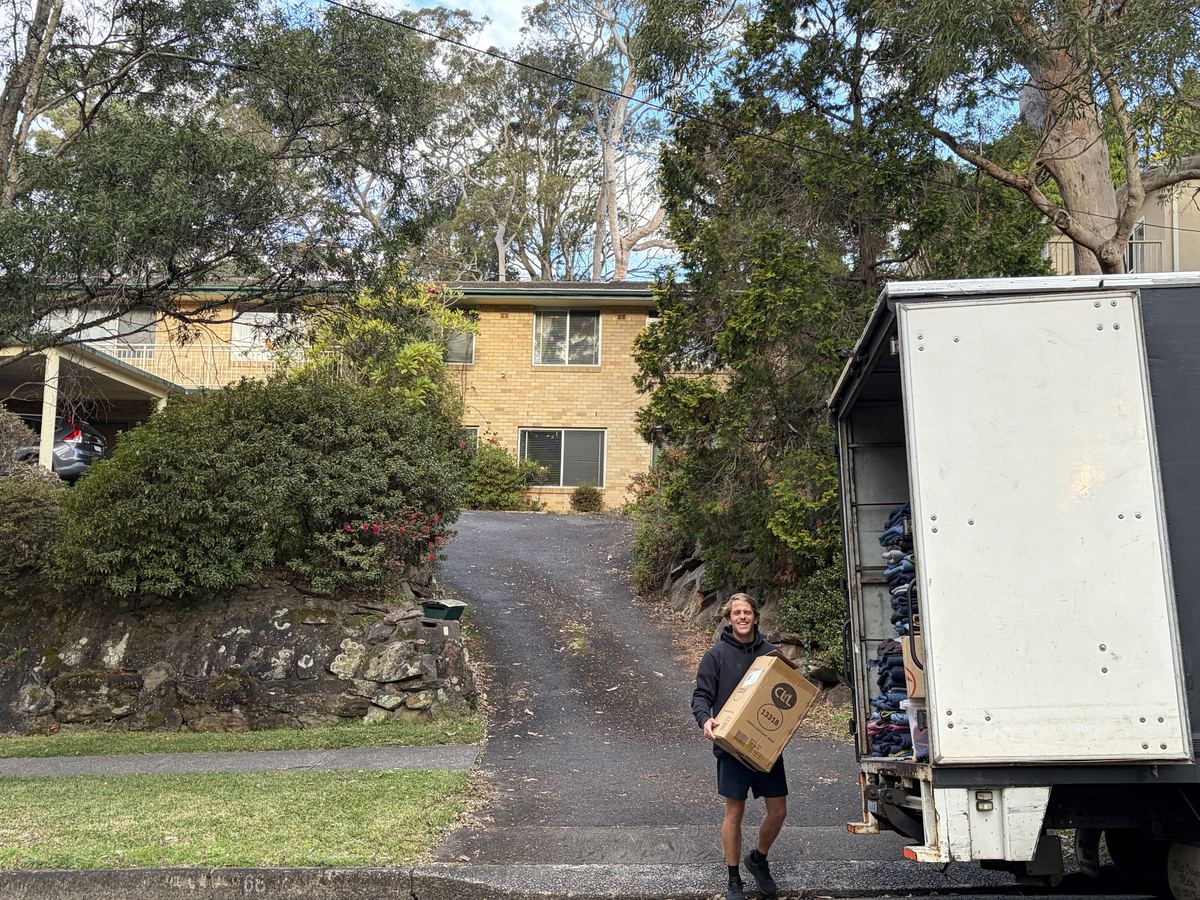
The ridge terrain is the defining access characteristic in Killarney Heights. The suburb sits above Middle Harbour at elevation, and the streets on the southern side of the ridge that face the harbour have the most significant slope. Properties in these streets with harbour views also have driveways that reflect the gradient - in some cases steep enough to require the truck to hold on the road and carry from there. Billy assesses driveway gradient for any Killarney Heights address in the southern ridge sections at quoting stage. The streets in the flatter central section of the suburb - closer to the oval and the schools - are more straightforward.
The 90% separate house rate in Killarney Heights means almost every job here is a house move rather than an apartment move. The housing stock from the 1960s development means many homes are on generous blocks with good off-street access, though the period character of some properties means internal layouts can have the narrower hallways and doorframes typical of that era. Billy notes any significant access or furniture dimension considerations during the quote for any Killarney Heights property that looks likely to have these characteristics.
What we cover in Killarney Heights
- House and family home moves
- Apartment and unit relocations
- Interstate moves - same crew throughout
- Packing and unpacking services
- Furniture disassembly and reassembly
- Careful handling in homes with steep or narrow access
Fully insured on every job. No deposit required. No cancellation fees.
What Killarney Heights customers say
"Moved from a Killarney Heights house on one of the ridge streets with a harbour view. Billy had worked out the truck position before the day, the driveway was steep but it all went perfectly."- Rachel and Martin, Killarney Heights ridge home move
How much does a Killarney Heights move cost?
We price by the hour. The rate depends on crew size, truck size, and access at both addresses. Use the quote form to get a clear estimate, or read our guide on how much removalists cost in Sydney.
Common questions about moving in Killarney Heights
When LJ Hooker subdivided Killarney Heights in the early 1960s, they continued the Irish theme from the suburb's name - which came from a Middle Harbour picnic ground called Killarney after the town in County Kerry. Streets including Galway Avenue, Blarney Avenue, Dublin Avenue, Donegal Road, Tipperary Avenue, and Ballyshannon Road all have Irish placename origins.
The main approach via Warringah Road from Forestville is manageable. The challenge is the ridge terrain on the southern side of the suburb where streets slope toward Middle Harbour - driveways in these sections can require the truck to hold on the road and carry from a safe point. Billy assesses gradient for any address in the ridge sections at quoting stage.
We charge by the hour. Ridge terrain and longer carries on sloped driveways are factored honestly. Get in touch for a clear quote.
Yes - same crew the whole way, no handoffs. Get in touch for an interstate quote.
We cover all of Sydney. Nearby suburbs we regularly work in include Forestville, Frenchs Forest, and Allambie Heights.
Two locals, not a call centre.
When you book a Killarney Heights move, Billy or Jet runs it personally - not a call centre handing you off to whoever's free. They know the Warringah Road approach well enough to plan the truck position and the day before it starts, not figure it out on the morning. On bigger jobs they bring in their own trusted, experienced team, but Billy or Jet is always on site - sometimes both of them. Either way, there's always a named person from The Movers Company accountable for your move. Every item is wrapped and carried properly, and your home - doorframes, walls, floors, at both ends - is protected the whole way through. Fully insured. No deposit, no cancellation fees.
Prefer to meet us first? Call and we'll come to you. Fill in the form and most quotes back same business day. Or call us directly on 0466 705 078 - Mon to Sat, 7am to 6pm.
Ready to book your Killarney Heights move?
Get a no-obligation quote from the team who'll actually be on the truck - happy to meet in person before you commit - just call us.